Fractures & Complex Trauma : Complete Guide to Injury, Treatment, and Recovery

Fractures and complex trauma are serious injuries that can affect not only bones but also muscles, joints, nerves, and overall mobility. These injuries often occur suddenly due to accidents, falls, sports injuries, or workplace incidents and require timely orthopedic care for proper healing and long-term function.
What Is a Fracture?
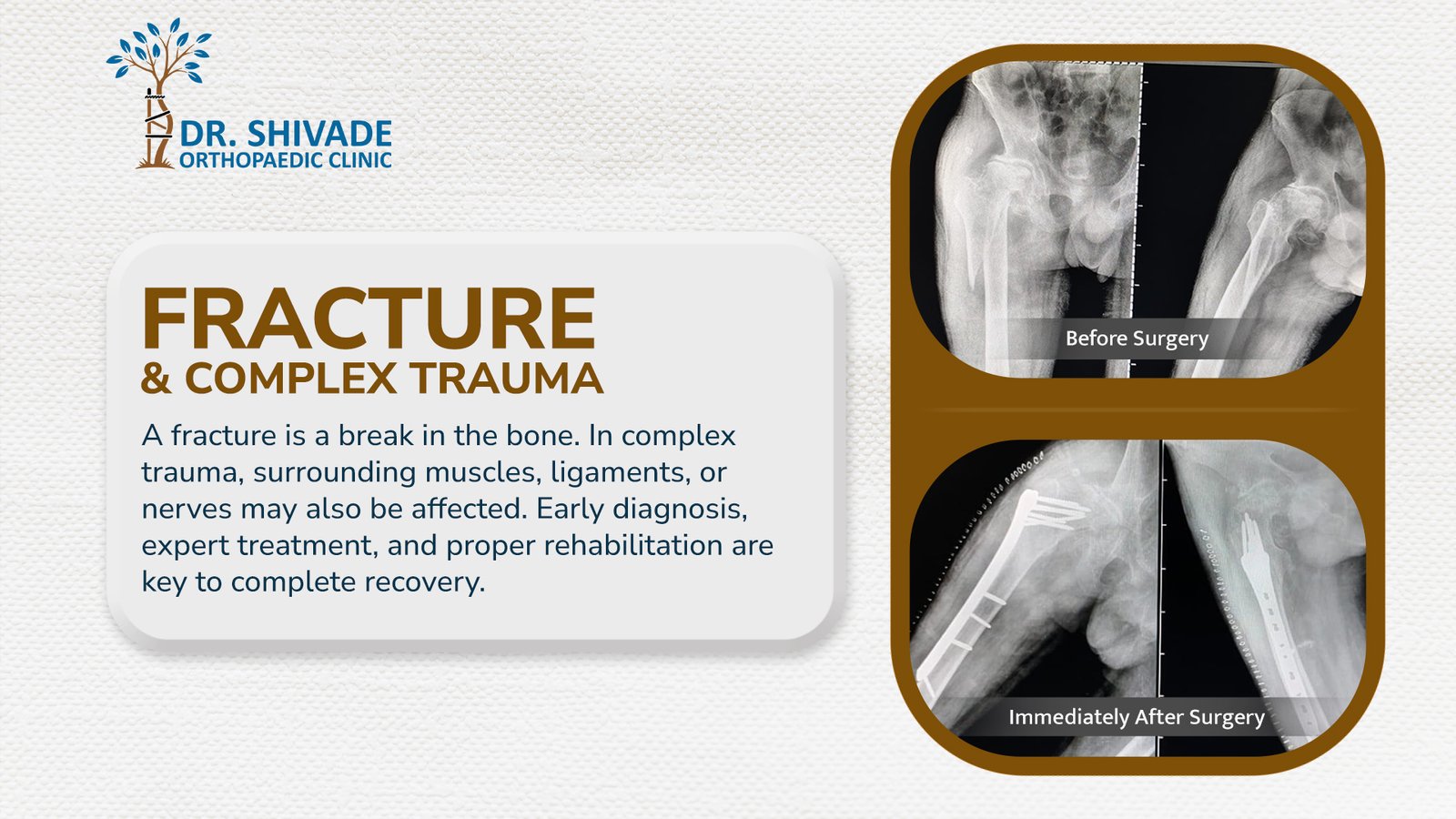
A fracture is a break or crack in a bone caused by excessive force, repetitive stress, or weakened bones. Fractures can range from mild to severe, depending on the impact and bone condition.
Common Types of Fractures
● Simple (Closed) Fracture: Bone breaks but does not pierce the skin
● Open (Compound) Fracture: Bone breaks through the skin; high risk of infection
● Comminuted Fracture: Bone breaks into multiple pieces
● Stress Fracture: Small cracks due to repetitive stress or overuse
Each type requires a different treatment approach based on severity and location.
What Is Complex Trauma?
Complex trauma refers to multiple injuries occurring at the same time, usually after high-impact incidents such as road traffic accidents, falls from height, or industrial injuries.
It may involve:
● Multiple bone fractures
● Joint dislocations
● Ligament and tendon injuries
● Damage to nerves or blood vessels
● Soft tissue injuries
Managing complex trauma requires advanced imaging, surgical expertise, and coordinated care.
Symptoms
That Need Immediate Attention Seek urgent orthopedic care if you experience:
● Severe pain or swelling
● Visible deformity
● Inability to move the injured part
● Open wounds with exposed bone
● Numbness or loss of sensation
Early treatment significantly reduces complications and improves recovery outcomes.
Diagnosis:
How Fractures and Trauma Are Evaluated
Accurate diagnosis is essential for proper healing. Orthopedic specialists use:
● X-rays to detect bone fractures
● CT scans for complex or joint injuries
● MRI scans to assess soft tissue and ligament damage
These tests help doctors plan the most effective treatment strategy.
Modern Treatment Options
Treatment depends on injury type, severity, age, and overall health.
Non-Surgical Treatment
● Plaster casting or splinting
● Braces and immobilization
● Pain management and swelling control Surgical Treatment
● Internal fixation using plates, screws, or rods
● Minimally invasive fracture surgery
● Complex trauma reconstruction procedures
Surgical intervention ensures proper bone alignment and faster functional recovery in severe cases.
Rehabilitation and Recovery
Recovery does not end with surgery or casting. Rehabilitation is crucial to regain strength, flexibility, and movement.
Recovery essentials include:
● Physiotherapy to restore mobility
● Gradual weight-bearing as advised
● Balanced diet rich in calcium, protein, and vitamin D
● Regular follow-ups with the orthopedic doctor
Healing time varies depending on the injury, but consistency is key.
Why Expert Orthopedic Care Matters
Proper fracture and trauma management helps:
✔ Prevent long-term disability
✔ Reduce chronic pain
✔ Restore normal movement
✔ Improve quality of life
Delayed or improper treatment can lead to deformity, stiffness, and permanent loss of function.
Conclusion
Fractures and complex trauma are medical emergencies that demand early diagnosis, expert orthopedic treatment, and structured rehabilitation. With the right care at the right time, patients can heal safely and return to an active, independent life.
Strong bones need strong care don’t delay treatment after injury.