
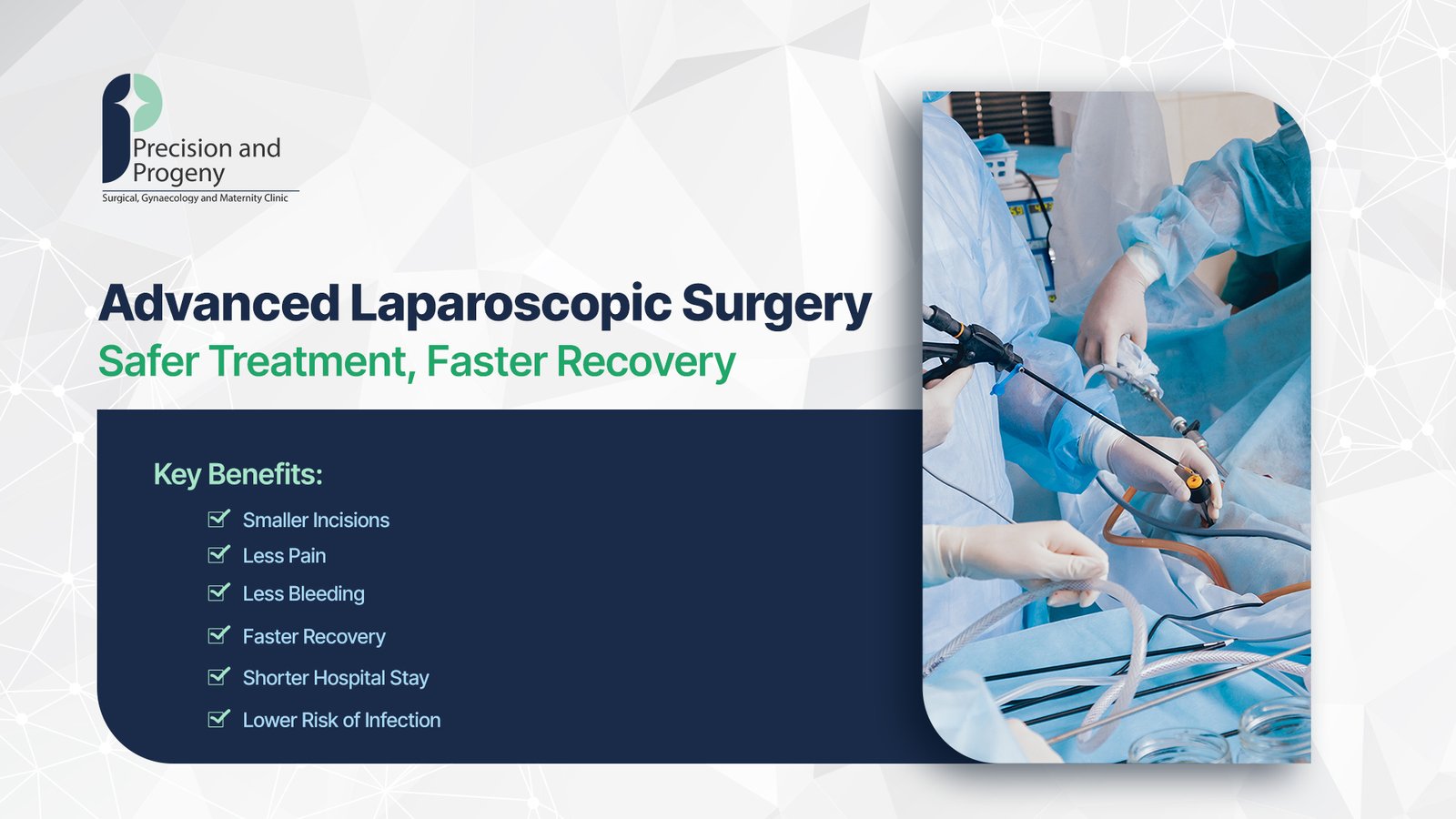
Advanced Laparoscopic Surgery Safer Treatment, Faster Recovery

In today’s medical world, surgery is no longer as frightening as it once was. Thanks to advanced laparoscopic surgery, also known as key hole surgery, patients can now undergo treatment with smaller cuts, less pain, and quicker recovery. This modern surgical technique has transformed the way many abdominal and pelvic conditions are treated.
What is Advanced Laparoscopic Surgery?
Advanced laparoscopic surgery, also known as key hole surgery, is a minimally invasive surgical technique where doctors operate using small incisions (tiny cuts) instead of one large cut. A thin tube with a camera, called a laparoscope, is inserted through a small incision. The camera displays clear images on a monitor, allowing the surgeon to perform the procedure with high precision.
Compared to traditional open surgery, this method is safer, more comfortable, and more convenient for patients.
Key Benefits of Advanced Laparoscopic Surgery
✅ Smaller Incisions – Only small cuts are made, which means minimal scarring.
✅ Less Pain – Reduced tissue damage leads to less post-operative discomfort.
✅ Less Bleeding – Minimal blood loss during surgery ensures safer treatment and quicker healing.
✅ Faster Recovery – Most patients return to normal activities much sooner.
✅ Shorter Hospital Stay – Many procedures require only 1–2 days of hospitalization.
✅ Lower Risk of Infection – Smaller wounds reduce the chances of complications.
Conditions Treated with Laparoscopic Surgery
Advanced laparoscopic surgery is commonly used for:
- Gallbladder removal
- Hernia repair
- Appendix removal
- Intestinal surgeries
- Gynecological procedures
👉 Read more about the treatments performed by Dr. Akshay Marathe.
Gynecological procedures include:
These procedures are performed with improved accuracy and safety using modern equipment and experienced surgical expertise.
Why It Is Considered Safer
The high-definition camera gives surgeons a magnified and detailed view of internal organs. This improves accuracy and reduces the risk of damage to surrounding tissues. Advanced instruments also allow better control, leading to safer outcomes.
Additionally, because the body experiences less trauma during surgery, healing happens faster and complications are fewer.
Recovery After Laparoscopic Surgery
Recovery is usually smooth. Patients can:
- Walk within hours after surgery
- Start eating normally sooner
- Return to daily routine within a few days (depending on the procedure)
Doctors still recommend proper rest, medication, and follow-up visits to ensure complete healing.
Conclusion
Advanced laparoscopic surgery, also known as key hole surgery, has changed the future of surgical treatment. With safer techniques, smaller scars, less pain, less bleeding, and faster recovery, it offers patients a comfortable and effective solution for many medical conditions.
Looking for advanced laparoscopic surgery in Pune? Consult Dr. Akshay Marathe, a leading laparoscopic surgeon in Pune, to understand whether advanced laparoscopic surgery is the right option for your condition. Early diagnosis and expert care ensure better outcomes.
Get expert laparoscopic care with faster recovery.
People Also Ask
Get answers to the questions patients ask most often and learn more about symptoms, diagnosis, treatment, recovery, and ways to maintain better health.
Advanced laparoscopic surgery is a minimally invasive procedure performed through small incisions using a camera (laparoscope) and specialized instruments. It offers a safer alternative to many traditional open surgeries.
The main benefits include smaller scars, less pain, minimal blood loss, a lower risk of infection, shorter hospital stays, and faster recovery compared to open surgery.
Laparoscopic surgery is commonly used for gallbladder removal, hernia repair, appendix removal, intestinal surgeries, and gynecological procedures such as ovarian cyst removal, fibroid surgery, endometriosis treatment, and hysterectomy.
Yes. When performed by an experienced laparoscopic surgeon, it is considered a safe and effective technique. The high-definition camera provides a magnified view, allowing for greater precision and reducing the risk of complications.
Recovery varies depending on the procedure, but most patients can walk within a few hours, resume eating soon after surgery, and return to their normal daily activities within a few days to a few weeks, following their surgeon's advice.