
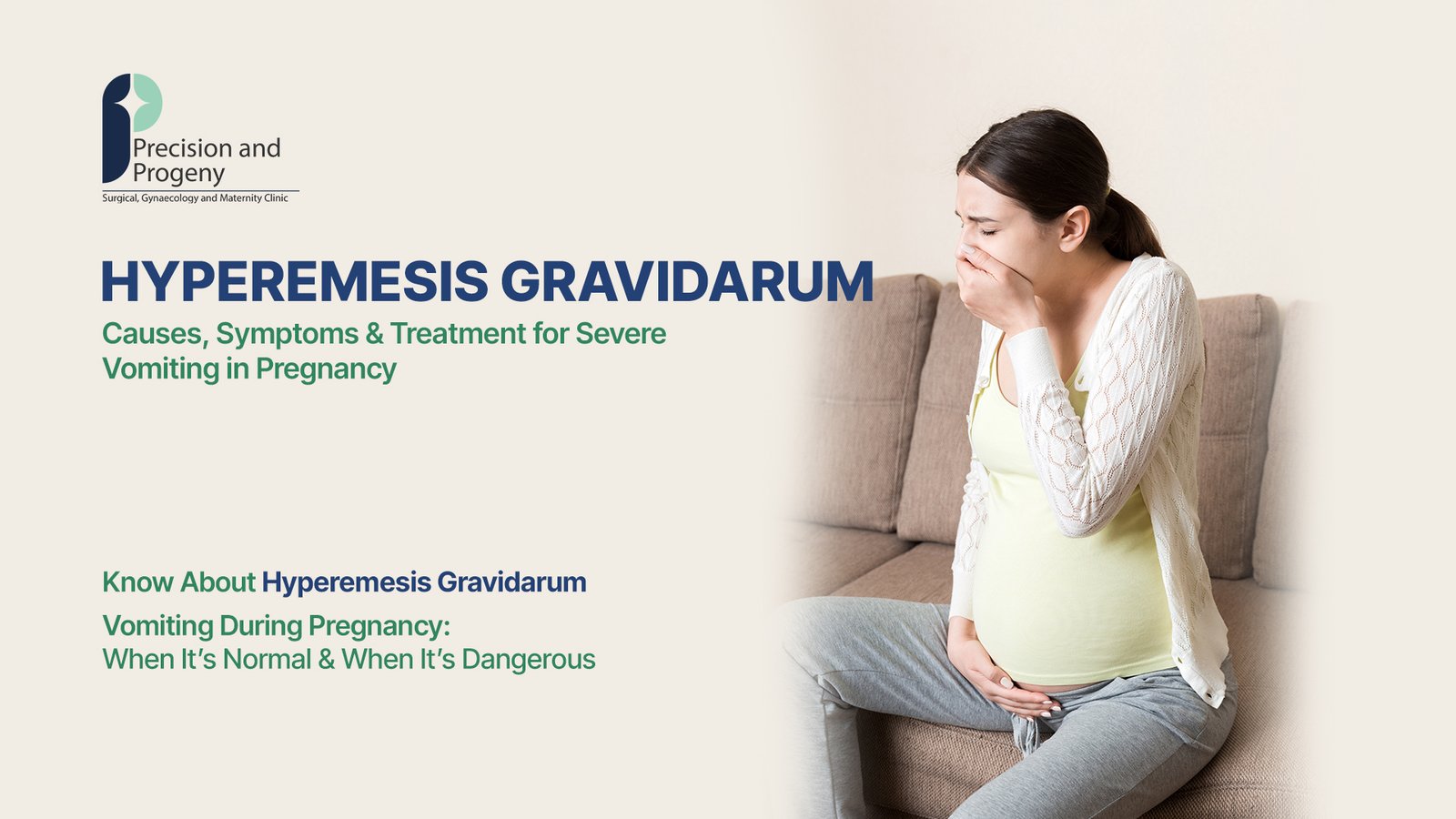
Severe Vomiting in Pregnancy? Don’t Ignore These Signs of Hyperemesis Gravidarum

Hyperemesis Gravidarum: Causes, Symptoms & Treatment for Severe Vomiting in Pregnancy
Pregnancy is a special journey, but for many women, it comes with challenges like nausea and vomiting. While mild symptoms—commonly known as morning sickness—are normal, some women experience a much more severe condition called Hyperemesis Gravidarum.
Understanding the difference is important to ensure timely care and a healthy pregnancy.
What is Hyperemesis Gravidarum?
Hyperemesis Gravidarum (HG) is a severe form of nausea and vomiting during pregnancy that can lead to dehydration, weight loss, and nutritional deficiencies.
Unlike normal morning sickness, HG can interfere with daily life and may require medical treatment.
Vomiting in Pregnancy: What’s Normal?
- Mild nausea, especially in the morning
- Occasional vomiting
- Symptoms improving after the first trimester
This is considered normal and usually does not harm the mother or baby.
When Does Vomiting Become Serious?
- Vomiting multiple times a day
- Inability to keep food or fluids down
- Weight loss (more than 5% of body weight)
- Dehydration or reduced urination
- Dizziness or fainting
👉 If these symptoms occur, medical attention is necessary.
Causes of Hyperemesis Gravidarum
- High levels of pregnancy hormones (hCG and estrogen)
- First pregnancy
- Multiple pregnancy (twins or more)
- History of HG in previous pregnancies
- Genetic factors
Risk Factors
- Are pregnant for the first time
- Have a family history of severe pregnancy vomiting
- Carry twins or triplets
- Have a history of motion sickness or migraines
Possible Complications
- Weakness
- Severe dehydration
- Electrolyte imbalance
- Malnutrition
- Low birth weight in rare cases
Early treatment can help prevent these complications.
Treatment for Hyperemesis Gravidarum
1. Lifestyle & Dietary Changes
- Eat small, frequent meals
- Avoid spicy and oily foods
- Drink fluids in small sips throughout the day
2. Medications
- Multivitamin supplement either oral or injectable form depending on the patient.
- Anti-nausea medications (as prescribed by a doctor)
3. Medical Care
- IV fluids to treat dehydration
- Nutritional support
- Hospitalization in severe cases
When Should You See a Doctor?
- You cannot keep food or water down
- You feel weak, dizzy, or faint
- You notice weight loss
- You have very little urine output
Tips to Manage Vomiting in Pregnancy
- Start your day with dry snacks like biscuits, Bhakari, Chapati.
- Avoid strong smells and triggers
- Get adequate rest
- Stay hydrated
Final Thoughts
While nausea and vomiting are common during pregnancy, severe or persistent symptoms should never be ignored. Hyperemesis Gravidarum is a serious condition, but with proper care and timely treatment, it can be managed effectively.
At Precision & Progeny Clinic, we are committed to provide expert care and support to ensure a safe and comfortable pregnancy journey for every mother.