IUCD (Intrauterine Contraceptive Device): A Safe, Effective & Long-Term Birth Control Option

Introduction
Family planning is an essential part of women’s healthcare, allowing individuals and couples to make informed decisions about when and how many children they would like to have. With advancements in modern medicine, there are several safe and effective contraceptive methods available that offer reliable pregnancy prevention while supporting a woman’s reproductive goals.
Among these options, the Intrauterine Contraceptive Device (IUCD) is one of the most trusted and widely recommended long-acting reversible contraceptives (LARCs). It provides highly effective, long-term protection against pregnancy without the need for daily medication. Another long-acting contraceptive option is the contraceptive implant (Implanon), which is inserted under the skin of the upper arm and also offers reliable birth control for several years.
Understanding how these methods work, their benefits, and who they are suitable for can help women choose the option that best fits their health, lifestyle, and future pregnancy plans.
What is an IUCD?
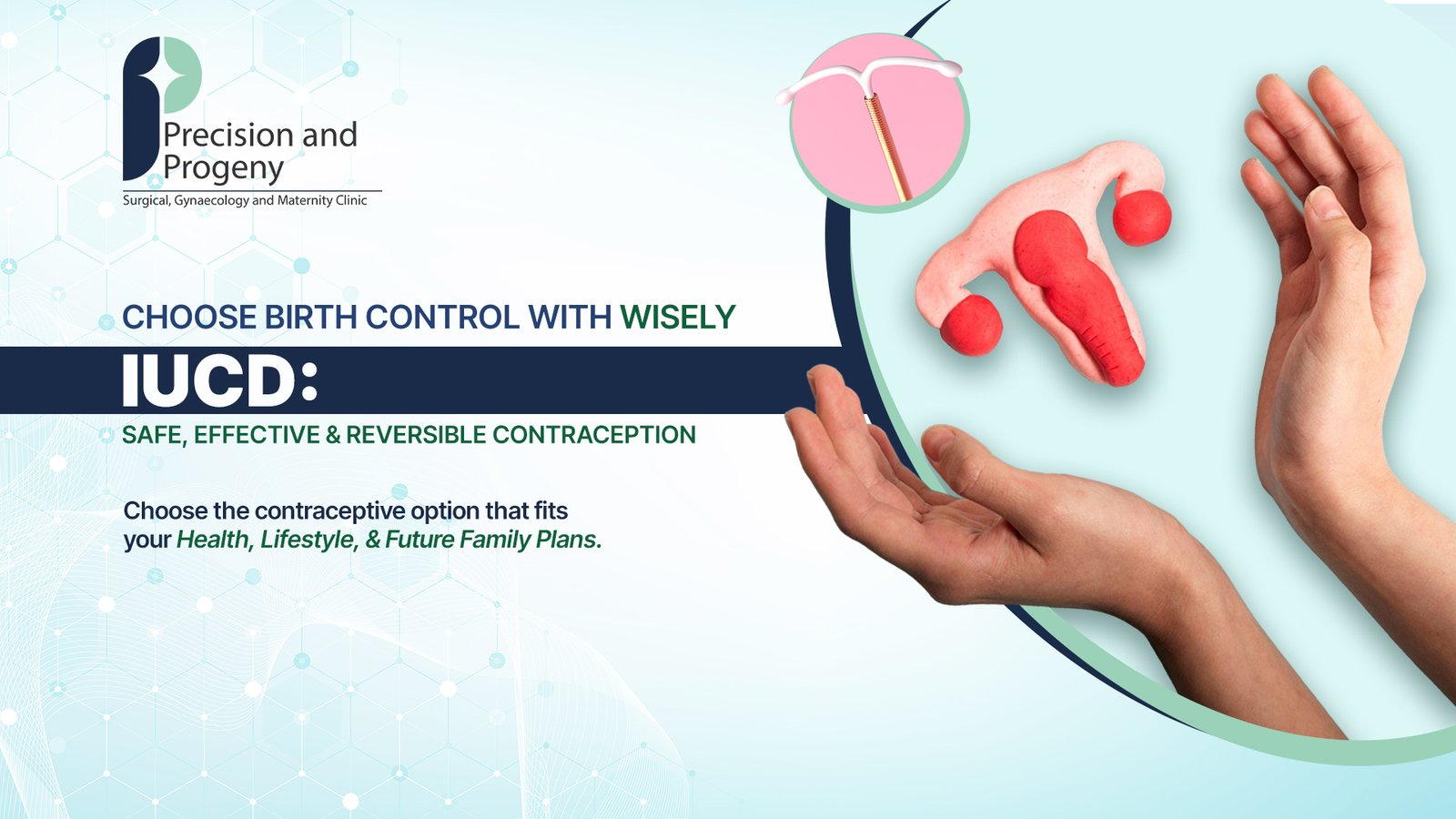
An Intrauterine Contraceptive Device (IUCD) is a small, flexible, T-shaped device that is placed inside the uterus by a qualified gynecologist to prevent pregnancy. Once inserted, it provides continuous contraception for several years, depending on the type of IUCD used.
IUCDs are considered one of the most effective forms of reversible contraception, with a success rate of more than 99%. Unlike oral contraceptive pills, an IUCD does not require daily attention, making it an ideal choice for women looking for a convenient and long-term solution.
One of the greatest advantages of an IUCD is that it is completely reversible. When a woman decides to conceive, the device can be removed, and fertility generally returns quickly.
Types of IUCD
There are two main types of IUCDs available, and each works in a different way.
1. Copper IUCD (Copper-T)
The Copper IUCD contains a small amount of copper wrapped around the device. Copper acts as a natural spermicide, creating an environment inside the uterus that prevents sperm from reaching and fertilizing the egg.
Key Features
Hormone-free contraception
Effective for 5–10 years (depending on the model)
More than 99% effective
Can also be used as emergency contraception if inserted within five days of unprotected intercourse in appropriate clinical situations
Advantages
No hormones involved
Long-lasting protection
Immediate return of fertility after removal
Suitable for women who prefer non-hormonal birth control
2. Hormonal IUCD
A hormonal IUCD releases a small amount of the hormone levonorgestrel directly into the uterus.
Instead of relying on copper, this hormone works by:
Thickening the cervical mucus so sperm cannot easily enter the uterus
Thinning the lining of the uterus
Sometimes preventing ovulation in some women
Duration
Depending on the type, hormonal IUCDs provide protection for 3–8 years.
Additional Benefits
Apart from preventing pregnancy, hormonal IUCDs may:
Reduce heavy menstrual bleeding
Decrease menstrual cramps
Improve quality of life for women with painful periods
Help manage certain gynecological conditions as advised by a gynecologist
How Does an IUCD Work?
Although Copper and Hormonal IUCDs work differently, both are highly effective in preventing pregnancy.
Copper IUCD
The copper ions released from the device affect sperm movement and survival, making it extremely difficult for sperm to fertilize an egg.
Hormonal IUCD
The hormone thickens cervical mucus, making it difficult for sperm to travel into the uterus. It also makes the uterine lining thinner and, in some women, suppresses ovulation.
Because these mechanisms act continuously, an IUCD provides reliable pregnancy prevention without requiring any daily action from the user.
Benefits of IUCD
The IUCD offers numerous benefits that make it one of the preferred contraceptive options worldwide.
Highly Effective
IUCDs are more than 99% effective, making them one of the most reliable methods of contraception available.
Long-Term Protection
Depending on the type, an IUCD can provide protection for 3 to 10 years.
Reversible
Once the IUCD is removed, fertility usually returns quickly, allowing women to plan pregnancy whenever they are ready.
Convenient
Unlike birth control pills, there is no need to remember a daily dose.
Cost-Effective
Although insertion involves an initial cost, it becomes economical over time because it lasts for several years.
Suitable During Breastfeeding
Many women can safely use an IUCD after childbirth while breastfeeding, based on their doctor’s advice.
Hormonal Health Benefits
Hormonal IUCDs may reduce:
Heavy menstrual bleeding
Painful periods
Menstrual cramps
Who Can Choose an IUCD?
An IUCD may be a suitable choice for:
Women who want reliable, long-term contraception.
Couples planning to delay pregnancy.
Women who wish to space pregnancies.
Breastfeeding mothers after medical evaluation.
Women who cannot take estrogen-containing contraceptive pills.
Women looking for a reversible contraceptive option.
Every woman’s health needs are different, so a gynecologist will recommend the most suitable method after assessing your medical history.
Who Should Avoid an IUCD?
Although IUCDs are safe for many women, they may not be appropriate in certain situations.
Your gynecologist may advise against an IUCD if you have:
An active pelvic infection
Unexplained vaginal bleeding
Certain abnormalities of the uterus
Suspected or confirmed pregnancy
Certain gynecological cancers
A proper consultation and examination are essential before insertion.
IUCD Insertion Procedure
The insertion procedure is simple and is usually completed within 5–10 minutes in an outpatient clinic.
Before the Procedure
Your gynecologist will:
Review your medical history.
Discuss your contraceptive needs.
Perform a pelvic examination.
Explain the procedure and answer any questions.
During the Procedure
The cervix is gently cleaned, and the IUCD is inserted into the uterus using a sterile applicator. Small threads attached to the device remain inside the vagina to allow future removal.
Some women experience mild cramping during insertion, but the discomfort usually lasts only a short time.
What to Expect After IUCD Insertion
Following insertion, it is normal to experience:
Mild cramping
Light spotting
Irregular bleeding during the first few weeks
These symptoms usually improve as the body adjusts.
Most women can return to work and normal activities on the same day.
A follow-up appointment may be recommended to ensure the IUCD is correctly positioned.
Possible Side Effects
Like any medical procedure, IUCDs may have some side effects.
Copper IUCD
Heavier periods
Increased menstrual cramps during the initial months
Spotting between periods
Hormonal IUCD
Irregular bleeding initially
Lighter periods
Some women may eventually stop having periods altogether
Serious complications such as infection, expulsion, or uterine perforation are uncommon but require immediate medical evaluation if symptoms occur.
Contraceptive Implant (Implanon): Another Long-Acting Birth Control Option
In addition to IUCDs, contraceptive implants are another highly effective long-acting reversible contraceptive.
The most commonly known implant is Implanon, a small, flexible rod inserted just beneath the skin of the upper arm.
It slowly releases a hormone called etonogestrel, which prevents pregnancy by:
Preventing ovulation
Thickening cervical mucus
Thinning the uterine lining
The implant provides contraception for up to three years and is also more than 99% effective.
Benefits of Contraceptive Implants
Highly effective contraception
Long-term protection
No daily medication required
Quick return of fertility after removal
Suitable for many women, including some breastfeeding mothers
Simple insertion and removal by a trained healthcare provider
IUCD vs Contraceptive Implant
| Feature | IUCD | Contraceptive Implant |
|---|---|---|
| Placement | Inside the uterus | Under the skin of the upper arm |
| Types | Copper & Hormonal | Hormonal only |
| Duration | 3–10 years | Up to 3 years |
| Hormone-Free Option | Yes (Copper-T) | No |
| Effectiveness | More than 99% | More than 99% |
| Fertility After Removal | Returns quickly | Returns quickly |
Both options are safe and highly effective. The right choice depends on individual preferences, medical history, and future pregnancy plans.
When Should You Consult Your Gynecologist?
Seek medical advice if you experience:
Severe abdominal or pelvic pain
Heavy vaginal bleeding
Fever or chills
Foul-smelling vaginal discharge
Missed periods with pregnancy symptoms
Inability to feel the IUCD strings
The strings suddenly become much longer or shorter
Prompt medical attention helps prevent complications and ensures the contraceptive remains effective.
Common Myths vs Facts
Myth: IUCD causes infertility.
Fact: Fertility generally returns quickly after the IUCD is removed.
Myth: IUCD can travel to other parts of the body.
Fact: A correctly placed IUCD remains inside the uterus.
Myth: IUCD is only for women who have had children.
Fact: Many women who have not had children may also be suitable candidates after medical evaluation.
Myth: IUCD affects sexual intercourse.
Fact: Neither partner should normally feel the IUCD during intercourse.
Conclusion
Long-acting reversible contraceptives such as IUCDs and contraceptive implants offer women safe, convenient, and highly effective options for family planning. These methods eliminate the need for daily contraception while providing reliable protection for several years.
Choosing the right contraceptive is a personal decision that should be based on your medical history, lifestyle, and future pregnancy plans. A consultation with an experienced gynecologist can help you understand the advantages and limitations of each option and select the method that best suits your needs.
With the right guidance and regular follow-up, long-acting contraceptive methods can provide peace of mind, flexibility, and confidence in managing your reproductive health.
Get expert care with faster recovery.
People Also Ask
Get answers to the questions patients ask most often and learn more about symptoms, diagnosis, treatment, recovery, and ways to maintain better health.
Most women experience only mild discomfort or cramping, which usually settles quickly.
Yes. Fertility usually returns soon after the device is removed.
Yes. Depending on your health and delivery, your gynecologist will recommend the most appropriate timing.
Both are highly effective. The best choice depends on your medical history, lifestyle, and reproductive goals.
Routine follow-up may be recommended after insertion, and you should visit your gynecologist if you notice unusual symptoms.