
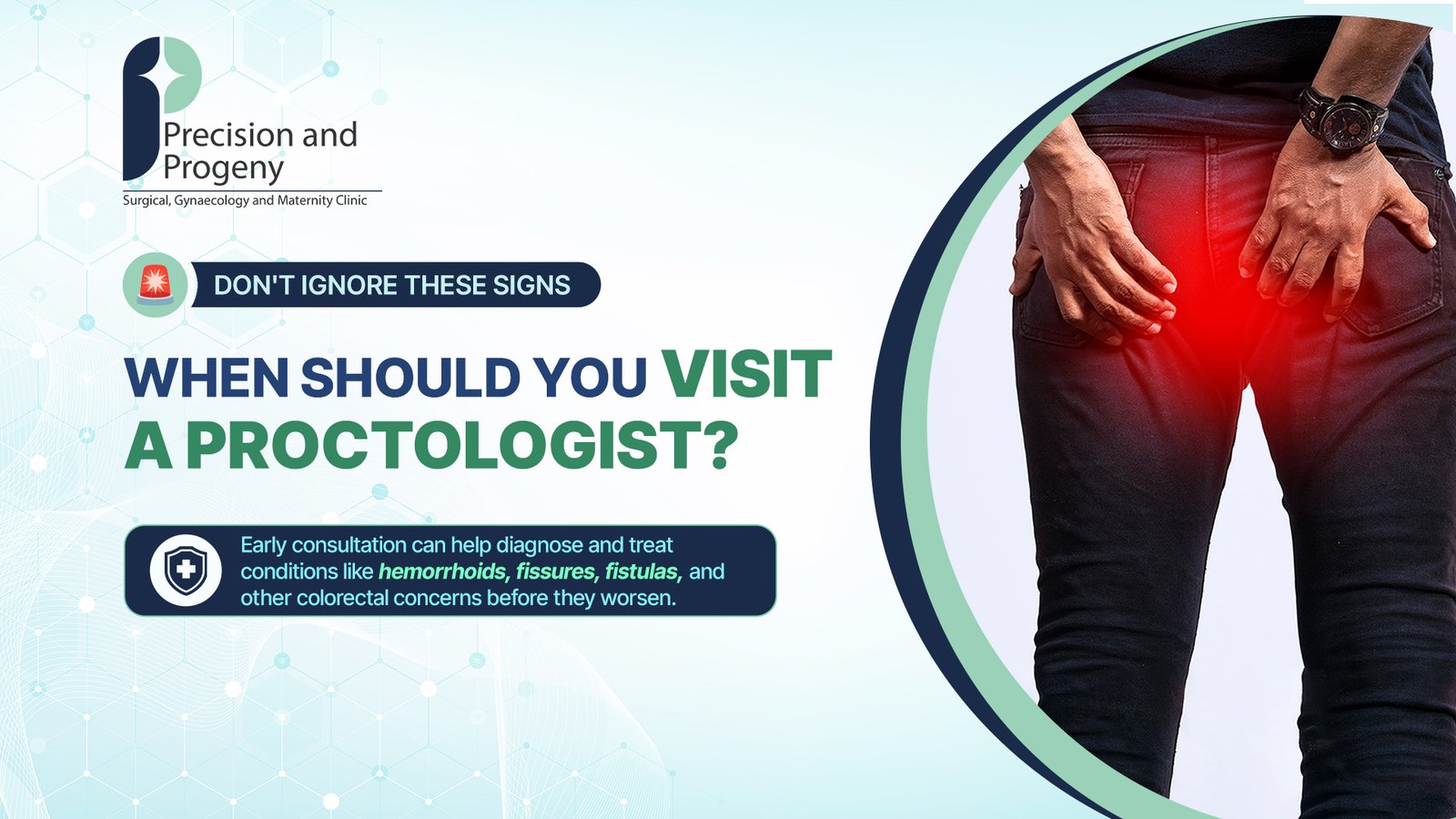
Don’t Ignore These Signs: When Should You Visit a Proctologist?

Many people avoid talking about problems related to the anus or rectum because they feel embarrassed. As a result, they often ignore symptoms, hoping they will disappear on their own. Unfortunately, delaying treatment can make the condition worse and lead to unnecessary pain or complications.
A proctologist, also known as a colorectal surgeon, is a medical specialist who diagnoses and treats conditions affecting the anus, rectum, colon, and lower digestive tract. Whether it’s a minor issue like hemorrhoids or a more serious condition requiring surgery, a proctologist can provide the right diagnosis and treatment.
Who Should Visit a Proctologist?
You should consider consulting a proctologist if you experience symptoms related to bowel movements, rectal pain, or anal discomfort that persist for more than a few days.
Early medical evaluation helps identify the exact cause and prevents complications. Many conditions treated by a proctologist are highly manageable when diagnosed early. Modern treatment options are also less invasive than many people think, allowing quicker recovery and less discomfort.
Common Signs You Shouldn’t Ignore
1. Persistent Pain During Bowel Movements
Passing stools should not be painful. If you experience sharp, burning, or constant pain during or after bowel movements, it may be due to:
- Anal fissures
- Anal infections
- Muscle spasms around the anus
Ignoring the pain can worsen the condition and make treatment more difficult.
2. Bleeding from the Anus
Seeing blood while passing stools can be alarming. Bright red blood is commonly associated with hemorrhoids or fissures, but it may also indicate:
- Rectal polyps
- Inflammatory bowel disease
- Colorectal cancer
- Infections
Even if the bleeding is painless or occurs only occasionally, it should always be evaluated by a specialist.
3. Itching, Swelling, or Irritation Around the Anal Area
Occasional itching may not be serious, but persistent itching or swelling could indicate:
- Hemorrhoids
- Skin infections
- Allergic reactions
- Fungal infections
- Poor hygiene or skin irritation
A proper examination can identify the underlying cause and provide lasting relief.
4. Changes in Bowel Habits
A sudden or ongoing change in bowel movements should never be ignored. This includes:
- Chronic constipation
- Frequent diarrhea
- Alternating constipation and diarrhea
- Narrow stools
- Difficulty emptying the bowels
These symptoms may point to digestive disorders, colorectal diseases, or other medical conditions that require professional evaluation.
5. Lumps or Growths Near the Anus
A lump near the anus can develop for various reasons, including:
- External hemorrhoids
- Anal abscesses
- Skin tags
- Pilonidal sinus
- Anal warts
Although not every lump is serious, any new growth should be examined by a proctologist for an accurate diagnosis.
6. Unexplained Pus or Discharge
Pus or continuous discharge from the anal area often indicates an infection such as:
- Anal fistula
- Rectal abscess
- Infected cyst
- Perianal abscess
Without timely treatment, these infections may worsen and require more extensive procedures.
Conditions Commonly Treated by a Proctologist
A proctologist specializes in diagnosing and treating a wide range of anorectal and colorectal conditions, including:
- Hemorrhoids (Piles)
- Anal fissures
- Anal fistulas
- Rectal abscesses
- Pilonidal sinus
- Rectal prolapse
- Colon polyps
- Inflammatory bowel disease (IBD)
- Colorectal cancer
- Chronic constipation
- Fecal incontinence
Some of these conditions can be treated with medications and lifestyle changes, while others may require minimally invasive or surgical procedures.
Why Early Diagnosis Is Important
Many anorectal conditions begin with mild symptoms but gradually become more severe if left untreated.
Early diagnosis offers several benefits:
- Faster and more effective treatment
- Relief from pain and discomfort
- Reduced risk of infection
- Prevention of disease progression
- Lower chances of requiring major surgery
- Better long-term digestive health
Regular medical check-ups are especially important if you have a family history of colorectal diseases or are over the age recommended for colorectal screening.
Simple Tips to Maintain Colorectal Health
Maintaining healthy bowel habits can reduce the risk of many anorectal conditions.
Eat a Fiber-Rich Diet
Include fresh fruits, vegetables, whole grains, legumes, and nuts to keep stools soft and prevent constipation.
Stay Hydrated
Drink at least 2–3 liters of water daily to support healthy digestion.
Exercise Regularly
Physical activity improves bowel function and reduces the risk of constipation.
Avoid Straining During Bowel Movements
Excessive straining increases pressure on the rectal veins and may lead to hemorrhoids.
Don’t Delay Using the Toilet
Ignoring the urge to pass stools can contribute to constipation and other bowel issues.
Maintain Good Hygiene
Keeping the anal area clean and dry helps prevent irritation and infections.
Get Regular Health Check-ups
If you have recurring symptoms or a family history of colorectal conditions, regular screening can help detect problems early.
Don’t Let Embarrassment Affect Your Health
Many people delay seeking treatment because they feel uncomfortable discussing anorectal symptoms. However, proctologists deal with these conditions every day and provide confidential, respectful, and compassionate care.
There is no need to suffer in silence when effective treatments are available.
Remember, what may seem like a minor problem today could become a more serious condition if left untreated.
Conclusion
Your body often gives early warning signs when something isn’t right. Symptoms such as persistent pain during bowel movements, rectal bleeding, itching, swelling, lumps, changes in bowel habits, or unusual discharge should never be ignored.
Consulting a proctologist at the right time can help diagnose and treat conditions like hemorrhoids, anal fissures, fistulas, abscesses, colorectal diseases, and other digestive disorders before they become more serious.
Get expert care with faster recovery.
People Also Ask
Get answers to the questions patients ask most often and learn more about symptoms, diagnosis, treatment, recovery, and ways to maintain better health.
A proctologist, also known as a colorectal surgeon, is a specialist who diagnoses and treats conditions affecting the anus, rectum, colon, and lower digestive tract, including hemorrhoids, anal fissures, fistulas, and colorectal diseases.
You should consult a proctologist if you experience persistent rectal pain, bleeding during bowel movements, itching, swelling, anal lumps, changes in bowel habits, or unusual discharge that lasts for more than a few days.
No. While hemorrhoids are a common cause of rectal bleeding, it can also be a sign of anal fissures, colorectal polyps, inflammatory bowel disease (IBD), infections, or colorectal cancer. A medical evaluation is important for an accurate diagnosis.
A proctologist treats hemorrhoids (piles), anal fissures, anal fistulas, rectal abscesses, pilonidal sinus, rectal prolapse, colon polyps, inflammatory bowel disease (IBD), colorectal cancer, chronic constipation, and fecal incontinence.
Yes. Hemorrhoids and piles are different names for the same condition, where swollen veins develop in or around the rectum and anus.