Uterine Fibroids: Symptoms, Causes & Treatment Options Every Woman Should Know

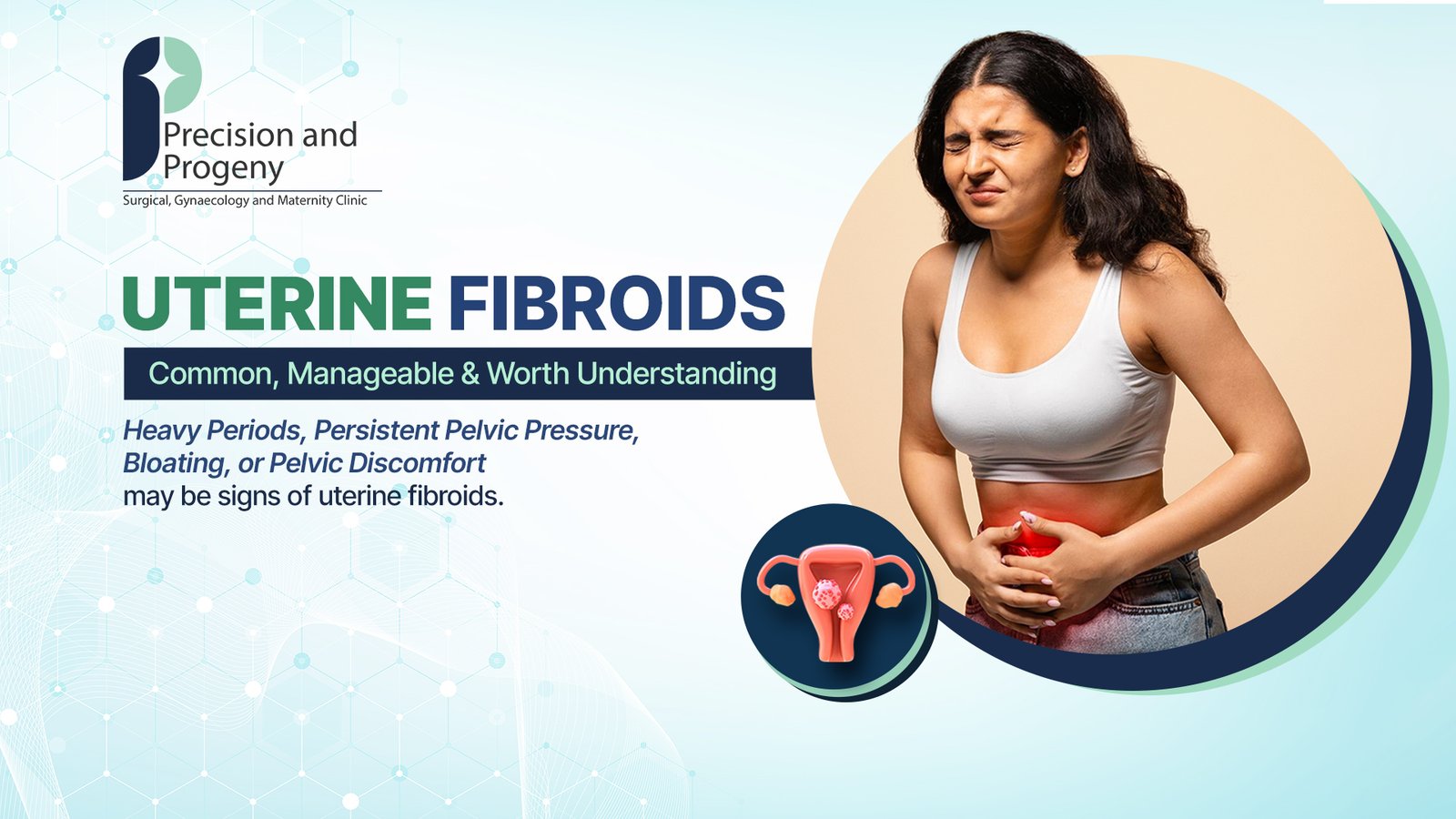
Heavy periods, constant pelvic pressure, or bloating that just won’t go away many women brush these off as “normal” parts of their cycle. But for a large number of women, especially in their 30s and 40s, these symptoms point to a very common but under-discussed condition: uterine fibroids.
What Are Uterine Fibroids?
Fibroids are non-cancerous (benign) growths that develop in or around the uterus. They can range from the size of a small seed to a large mass that changes the shape of the uterus. Fibroids are far more common than most women realise, and many women have them without ever knowing, since not all fibroids cause noticeable symptoms.
Common Signs and Symptoms
- Heavy, prolonged or irregular periods
- Pelvic pressure or persistent bloating
- Frequent urination, caused by pressure on the bladder
- Pain during intercourse
- Lower back pain or pelvic discomfort
- In some cases, difficulty conceiving
Because these symptoms overlap with several other gynaecological conditions, they’re easy to dismiss or misattribute which is exactly why an evaluation matters.
What Causes Fibroids?
The exact cause isn’t fully understood, but fibroid growth is closely linked to hormonal factors, particularly oestrogen and progesterone. Other factors that may increase risk include:
- Family history of fibroids
- Age most common in women in their 30s and 40s
- Obesity
- Never been pregnant
Fibroids tend to shrink naturally after menopause, as hormone levels decline.
How Are Fibroids Diagnosed?
- Pelvic examination — often the first step in identifying an enlarged or irregularly shaped uterus
- Ultrasound — the most common imaging method to confirm size, number, and location
- MRI — used in more complex cases to map out fibroids before planning treatment
Do Fibroids Always Need Surgery?
Not necessarily. Treatment depends on the size, location, and severity of symptoms, and options range from simple monitoring to surgical removal:
- Watchful waiting — small, symptom-free fibroids often just need periodic monitoring
- Medication — hormonal treatments can help manage heavy bleeding and pain
- Non-invasive procedures — such as uterine artery embolisation, which shrinks fibroids without surgery
- Myomectomy — surgical removal of fibroids while preserving the uterus, often done laparoscopically
- Hysterectomy — considered in more severe cases, typically when fertility preservation isn’t a priority
The right approach depends entirely on the individual, which is why symptoms disrupting daily life should always be evaluated rather than self-managed.
When Should You See a Doctor?
Consider booking a consultation if you notice:
- Periods that are unusually heavy or last longer than a week
- Pelvic pain or pressure that doesn’t ease
- Bloating that feels different from your usual cycle
- Pain during intercourse
- Difficulty conceiving despite trying for several months
Final Thoughts Uterine fibroids are common, manageable, and in most cases, nothing to panic about but they shouldn’t be ignored either. If your periods feel heavier than they used to, or pelvic discomfort has become a regular part of your month, it’s worth getting evaluated rather than living around the symptoms.
Get expert care with faster recovery.
Frequently Asked Questions (FAQs)
Get answers to the questions patients ask most often and learn more about symptoms, diagnosis, treatment, recovery, and ways to maintain better health.
No. The vast majority of fibroids are benign (non-cancerous). Cancerous fibroids are extremely rare.
Depending on their size and location, some fibroids can interfere with conception or pregnancy, while others have no impact at all. An evaluation can clarify whether yours are a concern.
Fibroids often shrink after menopause due to declining hormone levels, but they typically don't shrink on their own beforehand.
Prolonged heavy bleeding can lead to anaemia and significantly affect quality of life, so it shouldn't be left unaddressed even if it feels manageable.
Not necessarily. Many women are treated successfully with medication, minimally invasive procedures, or a myomectomy that preserves the uterus. Hysterectomy is reserved for specific cases.