Ovarian Cysts: Symptoms, Causes & When They Need Treatment

Many women discover they have an ovarian cyst during a routine scan, often without ever having felt a single symptom. While the word “cyst” can sound alarming, most are harmless and resolve on their own, but not all. Understanding the difference is what matters.
What Is an Ovarian Cyst?
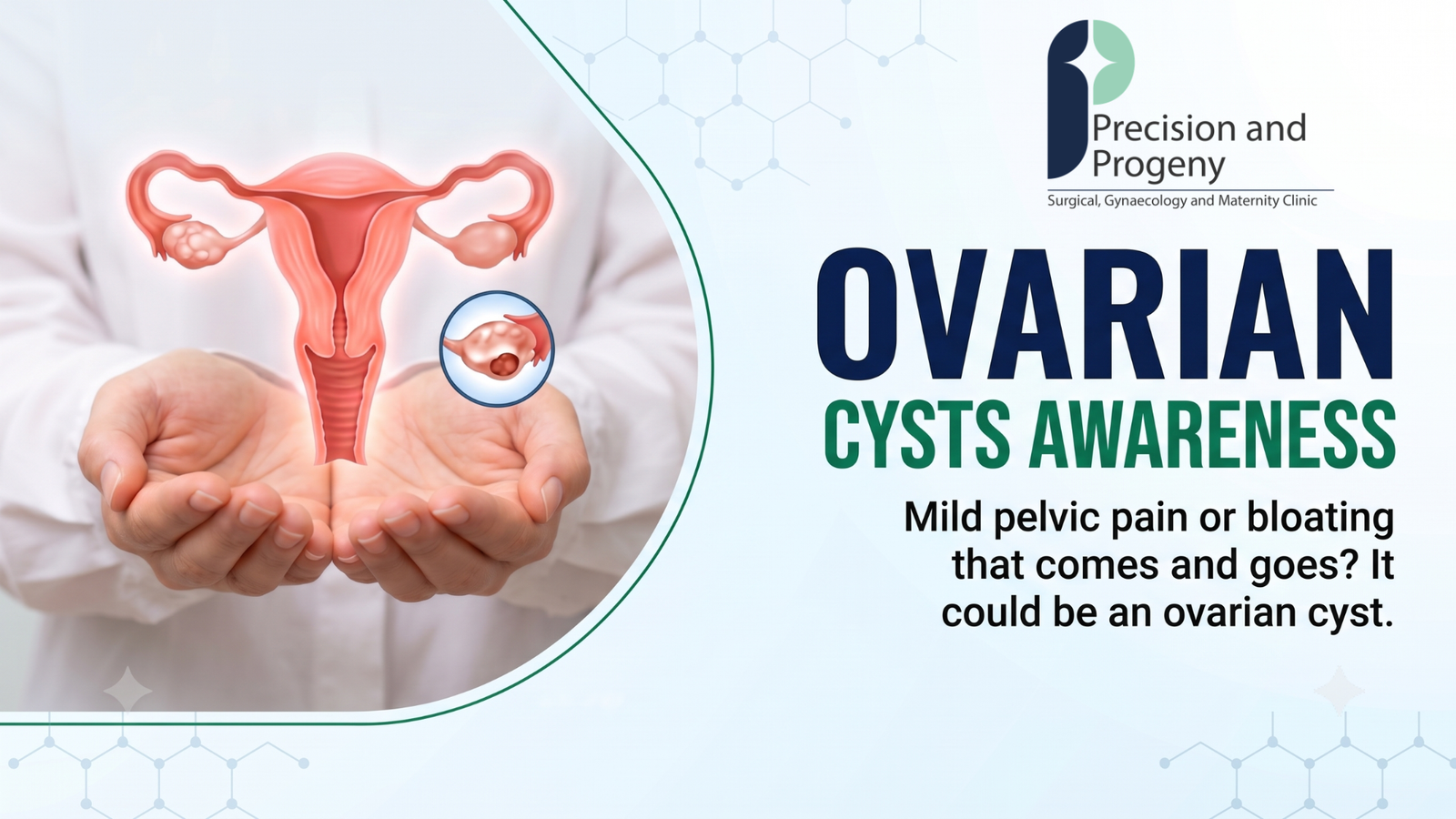
An ovarian cyst is a fluid-filled sac that forms on or inside an ovary. Most develop as part of the normal menstrual cycle and disappear within a few weeks to months without any treatment.
Types of Ovarian Cysts
- Functional cysts – the most common type, linked to the menstrual cycle (follicular or corpus luteum cysts)
- Endometrioma – a cyst linked to endometriosis
- Benign conditions – non-cancerous cysts such as dermoid cysts or cystadenomas, which need prompt treatment
- PCOS – multiple small cysts seen on sonography in adolescent and reproductive-age women
- Infection of the fallopian tubes and ovaries – can produce a cystic mass that needs prompt treatment
- Neoplastic cysts – some ovarian tumors can produce a cystic lesion that needs prompt intervention
Common Signs and Symptoms
- Dull ache or pressure on one side of the pelvis
- Bloating or a feeling of fullness in the abdomen
- Irregular periods or spotting between cycles
- Pain during intercourse
- Urinary symptoms
- Lower back ache
- Constipation, or difficulty or pain while passing stools
- In rare cases, sudden sharp pain if a cyst ruptures or twists
- Many cysts cause no symptoms at all and are found incidentally during a routine ultrasound.
What Causes Ovarian Cysts?
- Hormonal imbalances affecting ovulation
- Endometriosis
- Pregnancy, where a cyst can form to support early pregnancy
- Severe pelvic infections that spread to the ovaries
How Are Ovarian Cysts Diagnosed?
- Pelvic examination – to check for tenderness or an enlarged ovary
- Ultrasound – the primary method to assess size, type, and contents
- Blood tests – such as CA-125, used selectively when a cyst appears complex
- MRI – for further evaluation in more complicated cases
Do All Ovarian Cysts Need Surgery?
Not necessarily. Management depends on the cyst’s size, type, and whether it’s causing symptoms:
- Watchful waiting – most small, functional cysts resolve within a few menstrual cycles
- Monitoring – larger or persistent cysts, or cysts associated with abnormal blood tests or specific findings on sonography, need regular monitoring
- Medication – hormonal treatments can help prevent new functional cysts from forming
- Laparoscopic cystectomy – minimally invasive removal for larger, persistent, or complex cysts while preserving healthy ovarian tissue
- Emergency surgery – needed rarely, if a cyst ruptures or causes ovarian torsion
When Should You See a Doctor?
- Consider booking a consultation if you notice:
- Persistent pelvic pain lasting more than a few weeks
- Bloating that doesn’t resolve with your cycle
- Sudden, severe pelvic pain, especially with fever or vomiting
- Irregular periods alongside pelvic discomfort
- Urinary symptoms, lower back ache, or difficulty or pain while passing stools, especially alongside pelvic discomfort
Final Thoughts
Ovarian cysts are common, but not always harmless. Persistent symptoms or a cyst that keeps growing shouldn’t be left unchecked. A simple ultrasound and evaluation can offer clarity and peace of mind.
Get expert care with faster recovery.
Frequently Asked Questions (FAQs)
Get answers to the questions patients ask most often and learn more about symptoms, diagnosis, treatment, recovery, and ways to maintain better health.
Most are benign. Cancerous cysts are uncommon, but any cyst that looks unusual on imaging should be checked.
Most functional cysts don't, but types like endometriomas can affect ovarian function if left untreated.
Many functional cysts resolve within one to three cycles. Larger or persistent cysts need monitoring.
It can cause sudden, sharp pelvic pain. Severe pain or bleeding needs immediate medical attention.
This depends on the type of cyst. Your doctor will decide the plan of action and how often it needs to be monitored.