Inguinal Hernia: Early Symptoms, Causes & Advanced Treatment

Inguinal Hernia: Early Symptoms, Causes & Advanced Treatment
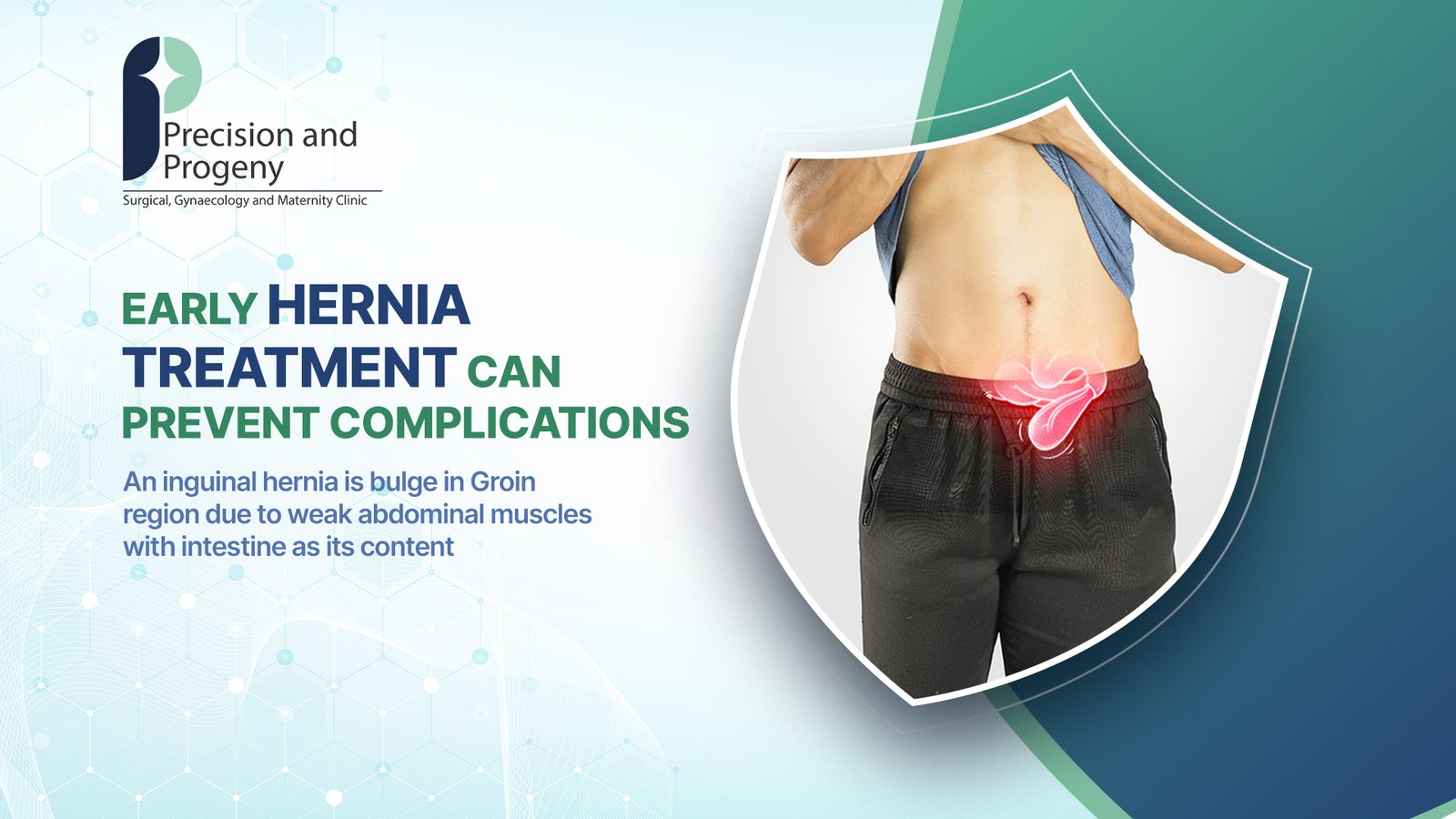
An inguinal hernia is one of the most common surgical conditions affecting people of all ages, especially men. It occurs when a part of the intestine or abdominal tissue pushes through a weak spot in the lower abdominal muscles, creating a bulge in the groin area. If left untreated, an inguinal hernia can lead to pain, discomfort, and serious complications.
What is an Inguinal Hernia?
An inguinal hernia is the protrusion of abdominal contents, such as the intestine or omentum, through weakened abdominal muscles in the groin region. It may appear as a visible swelling or lump that becomes more noticeable while coughing, lifting heavy objects, or standing for long periods.
This condition can affect both men and women, although it is more commonly seen in men.
Common Symptoms of Inguinal Hernia
Early detection is important to prevent complications. Common signs and symptoms include:
- Swelling or bulge in the groin area
- Pain while coughing, bending, or lifting weights
- Burning or dragging sensation in the lower abdomen
- Groin discomfort after long standing hours
- Heaviness or pressure in the groin
- Swelling near the scrotum in men
- Pain during physical activity
If the hernia becomes trapped or strangulated, it may cause severe pain and require emergency surgery.
Causes of Inguinal Hernia
Several factors can increase the risk of developing an inguinal hernia, including:
- Weak abdominal muscles
- Heavy weight lifting
- Chronic cough
- Constipation and straining
- Obesity
- Smoking
- Aging
- Previous abdominal surgery
- Family history of hernia
Types of Inguinal Hernia
Direct Inguinal Hernia
Usually develops due to muscle weakness over time and is more common in older adults.
Indirect Inguinal Hernia
Often present from birth due to incomplete closure of the abdominal wall.
Diagnosis of Inguinal Hernia
At Precision & Progeny Clinic, Dr. Akshay Marathe performs a detailed clinical examination and may recommend:
- Physical examination
- Ultrasound scan
- CT scan if required
- Medical history evaluation
Early diagnosis helps avoid complications and improves treatment outcomes.
Best Treatment for Inguinal Hernia in Pune
An inguinal hernia does not heal on its own. Surgery is the most effective and permanent treatment option.
Laparoscopic Hernia Surgery
Dr. Akshay Marathe specializes in laparoscopic inguinal hernia surgery in Pune, a minimally invasive technique that offers:
- Smaller incisions
- Minimal pain
- Faster recovery
- Reduced hospital stay
- Less scarring
- Quick return to daily activities
Open Hernia Surgery
In some cases, traditional open surgery may be recommended depending on the patient’s condition and hernia size.
Benefits of Early Hernia Treatment
Delaying hernia treatment can increase the risk of complications. Early surgical intervention helps:
- Prevent hernia enlargement
- Reduce pain and discomfort
- Avoid emergency complications
- Improve quality of life
- Ensure faster recovery
When Should You Consult a Hernia Specialist?
You should consult a hernia surgeon immediately if you experience:
- Sudden severe groin pain
- Redness or swelling in the groin
- Nausea or vomiting
- Fever with hernia pain
- Difficulty pushing the bulge back inside
Conclusion
An inguinal hernia should never be ignored. Early diagnosis and timely laparoscopic hernia surgery can prevent complications and help patients return to normal life quickly.
If you are searching for the best inguinal hernia surgeon in Pune or expert laparoscopic hernia treatment, consult Dr. Akshay Marathe at Precision & Progeny Clinic for advanced and reliable surgical care.
Get expert care with faster recovery.
People Also Ask
Get answers to the questions patients ask most often and learn more about symptoms, diagnosis, treatment, recovery, and ways to maintain better health.
No. An inguinal hernia does not heal on its own, and no medication or exercise can repair the weakened abdominal wall. Surgery is the only permanent treatment and helps prevent the hernia from enlarging or causing serious complications.
The most common early symptoms include:
- A bulge or swelling in the groin
- Pain or discomfort while lifting, coughing, or bending
- A feeling of heaviness or pressure in the groin
- Burning or aching sensation in the affected area
- Swelling near the scrotum in men
If these symptoms persist, consult a hernia specialist for evaluation.
Laparoscopic hernia surgery offers several advantages for many patients, including:
- Smaller incisions
- Less postoperative pain
- Faster recovery
- Shorter hospital stay
- Minimal scarring
- Earlier return to normal activities
However, the most suitable surgical approach depends on the size of the hernia, the patient's overall health, and the surgeon's assessment.
An untreated inguinal hernia can gradually increase in size and may lead to complications such as incarceration (when the hernia becomes trapped) or strangulation (when the blood supply to the trapped tissue is cut off). A strangulated hernia is a medical emergency that requires immediate surgery.
Seek immediate medical care if you experience:
- Sudden, severe groin pain
- A bulge that becomes hard, tender, or cannot be pushed back in
- Redness or discoloration over the hernia
- Nausea or vomiting
- Fever along with hernia pain
- Severe abdominal pain or bloating
These symptoms may indicate a strangulated hernia, which requires urgent surgical treatment.