
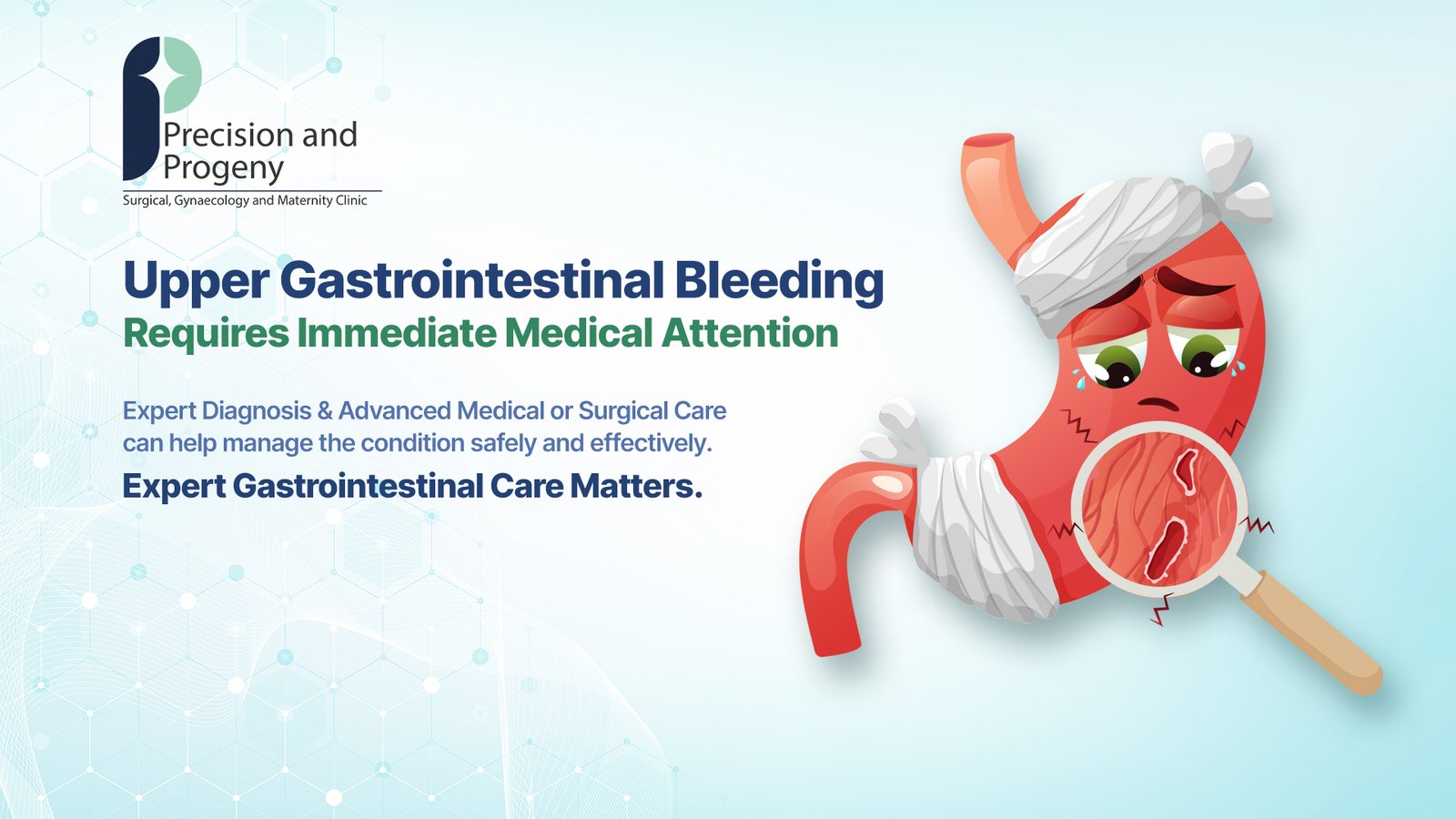
Expert Care for Upper Gastrointestinal Bleeding: Diagnosis and Surgical Management

Expert Care for Upper Gastrointestinal Bleeding: Diagnosis and Surgical Management
Upper gastrointestinal (GI) bleeding is a serious medical condition that requires timely diagnosis and expert treatment.
Bleeding can occur anywhere in the upper digestive tract, including the food pipe (esophagus), stomach, or the first part
of the small intestine (duodenum). Early medical attention can help prevent complications and ensure faster recovery.
At Precision & Progeny Clinic, patients receive advanced diagnostic evaluation and personalized surgical care
for upper GI bleeding with a focus on safety, accuracy, and long-term digestive health.
What is Upper Gastrointestinal Bleeding?
Upper GI bleeding refers to internal bleeding that occurs in the upper digestive system. The severity can range from mild
blood loss to life-threatening emergencies.
Common Signs and Symptoms Include:
- Vomiting blood or dark-colored material
- Black, tarry stools
- Abdominal pain or discomfort
- Weakness and dizziness
- Sudden drop in blood pressure
- Fatigue caused by blood loss
Ignoring these symptoms can lead to severe complications, including anemia, shock, or organ damage.
Common Causes of Upper GI Bleeding
1. Peptic Ulcers
Ulcers in the stomach or duodenum are one of the leading causes of upper GI bleeding. These ulcers may develop due to
infection, excessive painkiller use, or acid-related damage.
2. Gastritis
Inflammation of the stomach lining can lead to irritation and bleeding, especially in individuals with alcohol use, stress,
or long-term medication use.
3. Esophageal Varices
Enlarged veins in the food pipe, commonly linked to liver disease, can rupture and cause severe bleeding.
4. Mallory-Weiss Tear
Forceful vomiting or repeated retching may create tears in the food pipe lining, resulting in bleeding.
5. Stomach or Esophageal Tumors
In some cases, tumors or cancers in the digestive tract can lead to persistent bleeding.
Importance of Early Diagnosis
Timely diagnosis plays a vital role in identifying the source of bleeding and deciding the right treatment approach.
At Precision & Progeny Clinic, advanced diagnostic methods help evaluate the condition accurately and quickly.
Diagnostic Procedures May Include:
- Upper GI endoscopy
- Blood investigations
- CT scan or imaging studies
- Liver function tests
- Stool examination
An upper GI endoscopy is one of the most effective methods for locating the bleeding source and sometimes treating it
immediately during the procedure.
Treatment Options for Upper GI Bleeding
Non-Surgical Management
Many cases can be controlled with:
- Medications to reduce stomach acid
- Endoscopic procedures to stop bleeding
- IV fluids and blood transfusions
- Lifestyle and dietary modifications
Surgical Management
Surgery may be required in severe or recurrent cases where bleeding cannot be controlled through medication or endoscopy.
Surgical treatment may involve:
- Repairing bleeding ulcers
- Removing damaged tissue
- Treating perforations
- Managing complications related to liver disease or tumors
Modern surgical techniques focus on faster recovery, reduced pain, and improved patient outcomes.
When Should You Seek Immediate Medical Attention?
Do not ignore symptoms such as:
- Vomiting blood
- Black stools
- Sudden weakness
- Severe abdominal pain
- Fainting or dizziness
These signs may indicate serious internal bleeding and require urgent medical care.
Advanced Gastrointestinal Care at Precision & Progeny Clinic
At Precision & Progeny Clinic, patients receive compassionate and evidence-based care for gastrointestinal conditions.
The clinic focuses on accurate diagnosis, advanced surgical management, and personalized recovery plans to ensure better digestive health
and long-term wellness.
Expert evaluation and timely intervention can make a significant difference in managing upper GI bleeding safely and effectively.
Conclusion
Upper gastrointestinal bleeding should never be ignored. Early diagnosis and proper treatment are essential to prevent complications
and protect overall health.
Whether the condition requires medical management or surgical intervention, receiving care from experienced specialists ensures safer
treatment and better recovery outcomes.
If you or your loved one experiences symptoms of upper GI bleeding, seek expert consultation immediately for proper diagnosis and timely care.
Get expert care with faster recovery.
People Also Ask
Get answers to the questions patients ask most often and learn more about symptoms, diagnosis, treatment, recovery, and ways to maintain better health.
Upper GI bleeding is bleeding that occurs in the upper part of the digestive tract, including the esophagus (food pipe), stomach, or duodenum (the first part of the small intestine). It can range from mild to life-threatening and requires prompt medical evaluation.
Common symptoms include:
- Vomiting blood or coffee-ground-like material
- Black, tarry stools
- Severe abdominal pain
- Dizziness or fainting
- Weakness and fatigue
- Rapid heartbeat or low blood pressure
If you experience any of these symptoms, seek immediate medical attention.
Doctors may recommend one or more of the following tests:
- Upper GI endoscopy (the most effective test to locate and often treat the bleeding source)
- Blood tests
- Stool examination
- CT scan or other imaging studies
- Liver function tests, if liver disease is suspected
Yes. Many cases can be successfully managed with medications, endoscopic procedures to stop the bleeding, intravenous fluids, and blood transfusions if needed. Surgery is usually considered only when bleeding is severe, recurrent, or cannot be controlled through non-surgical treatments.
You should seek emergency medical care immediately if you experience:
- Vomiting blood
- Black, tarry stools
- Sudden severe abdominal pain
- Fainting or loss of consciousness
- Persistent dizziness or weakness
- Signs of shock, such as cold, clammy skin or rapid heartbeat