Incisional Hernia: Causes, Warning Signs & Treatment After Surgery

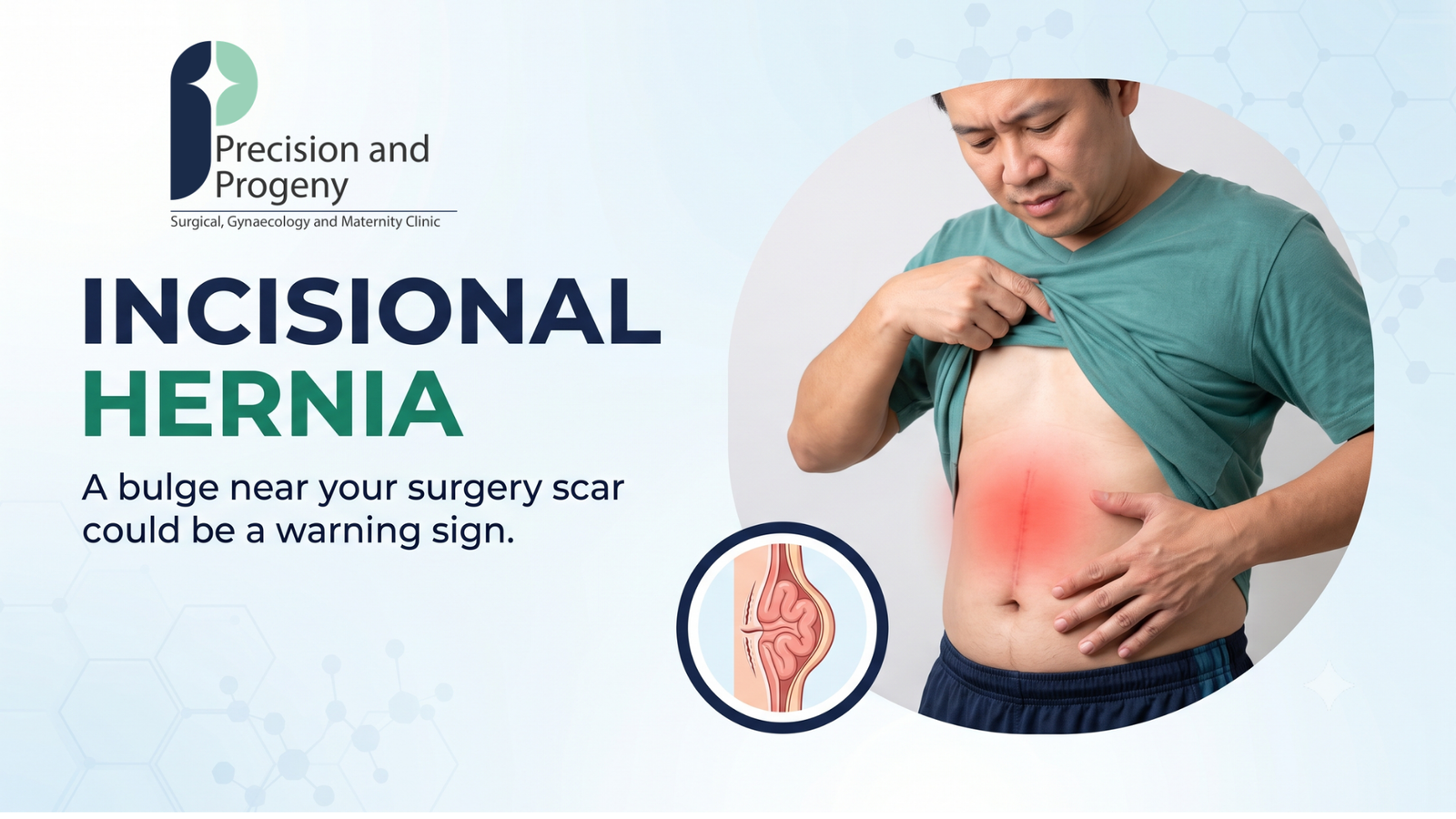
A bulge showing up near an old surgical scar catches most people off guard, especially years after the original procedure. More often than not, it’s an incisional hernia, a condition that develops slowly and needs proper evaluation rather than being dismissed as swelling or weight change.
What Is an Incisional Hernia?
An incisional hernia forms when tissue, or sometimes part of the intestine, pushes through a weak point at the site of a prior surgical incision. Because scar tissue tends to be less resilient than the surrounding muscle wall, this area remains a vulnerable spot long after the original surgery has healed.
Who Is at Risk?
- Anyone with a history of abdominal surgery C-section, gallbladder removal, appendectomy, hysterectomy, or similar procedures
- Wound infections or delayed healing after the initial surgery
- Excess body weight, which adds pressure on the abdominal wall
- Repeated surgeries performed through the same incision
- Heavy lifting, straining, or persistent coughing during the recovery phase
Common Signs and Symptoms
- A visible or noticeable bulge forming near a previous surgical scar
- A pulling or dragging feeling in the area
- Discomfort that worsens with physical exertion or prolonged standing
- A bulge that gradually increases in size over weeks or months
- Severe pain, nausea, or vomiting if the hernia becomes trapped
Why Early Evaluation Matters
Incisional hernias rarely stay the same size; the weakened scar tissue doesn’t regain strength on its own, so the bulge tends to grow larger over time. If the trapped tissue loses its blood supply (strangulation), it turns into a medical emergency requiring immediate surgery.
How Is It Diagnosed?
- Physical examination — assessing the bulge’s size and behavior when standing or straining
- Ultrasound — to evaluate the hernia’s extent and contents
- CT scan — used for larger, recurrent, or more complex cases to guide surgical planning
Treatment: Laparoscopic Repair with Mesh
Since incisional hernias don’t heal on their own, surgical correction is the standard treatment. Laparoscopic repair with mesh placement is widely preferred today:
- Small incisions rather than reopening the original surgical site
- Mesh reinforcement to strengthen the weakened area and lower recurrence risk
- Reduced post-operative pain and shorter hospital stay
- Quicker return to daily activities compared to traditional open repair
Recovery Timeline
- First 24–48 hours: Mild discomfort at the incision sites; gentle movement is encouraged
- First 2 weeks: Avoid lifting heavy objects or strenuous activity
- 4–6 weeks: Most patients return to their normal routine, as advised by their surgeon
- Follow-up visit: Confirms the repair is healing properly with no early signs of recurrence
When to Seek Immediate Medical Care
Reach out to a doctor right away if you experience:
- A hernia bulge that suddenly turns painful, firm, or discolored
- Nausea or vomiting alongside the bulge
- A bulge that can no longer be pushed back in
- Fever accompanying pain near the surgical scar
Final Thoughts
An incisional hernia is a common but often overlooked complication of past surgery. If you notice a new bulge forming near an old surgical scar, getting it evaluated sooner rather than later makes treatment simpler and recovery smoother.
Get expert care with faster recovery.
Frequently Asked Questions (FAQs)
Get answers to the questions patients ask most often and learn more about symptoms, diagnosis, treatment, recovery, and ways to maintain better health.
It can develop anywhere from a few months to several years later, since the weakening of scar tissue happens gradually over time.
While not entirely avoidable, following post-surgical activity restrictions, maintaining a healthy weight, and treating wound infections early can help lower the risk.
Not usually laparoscopic repair is typically less invasive than the original operation, since it doesn't require reopening the previous surgical site.
With mesh reinforcement, recurrence is less common, though it can still occur, particularly if lifting restrictions aren't followed during recovery.